 11
11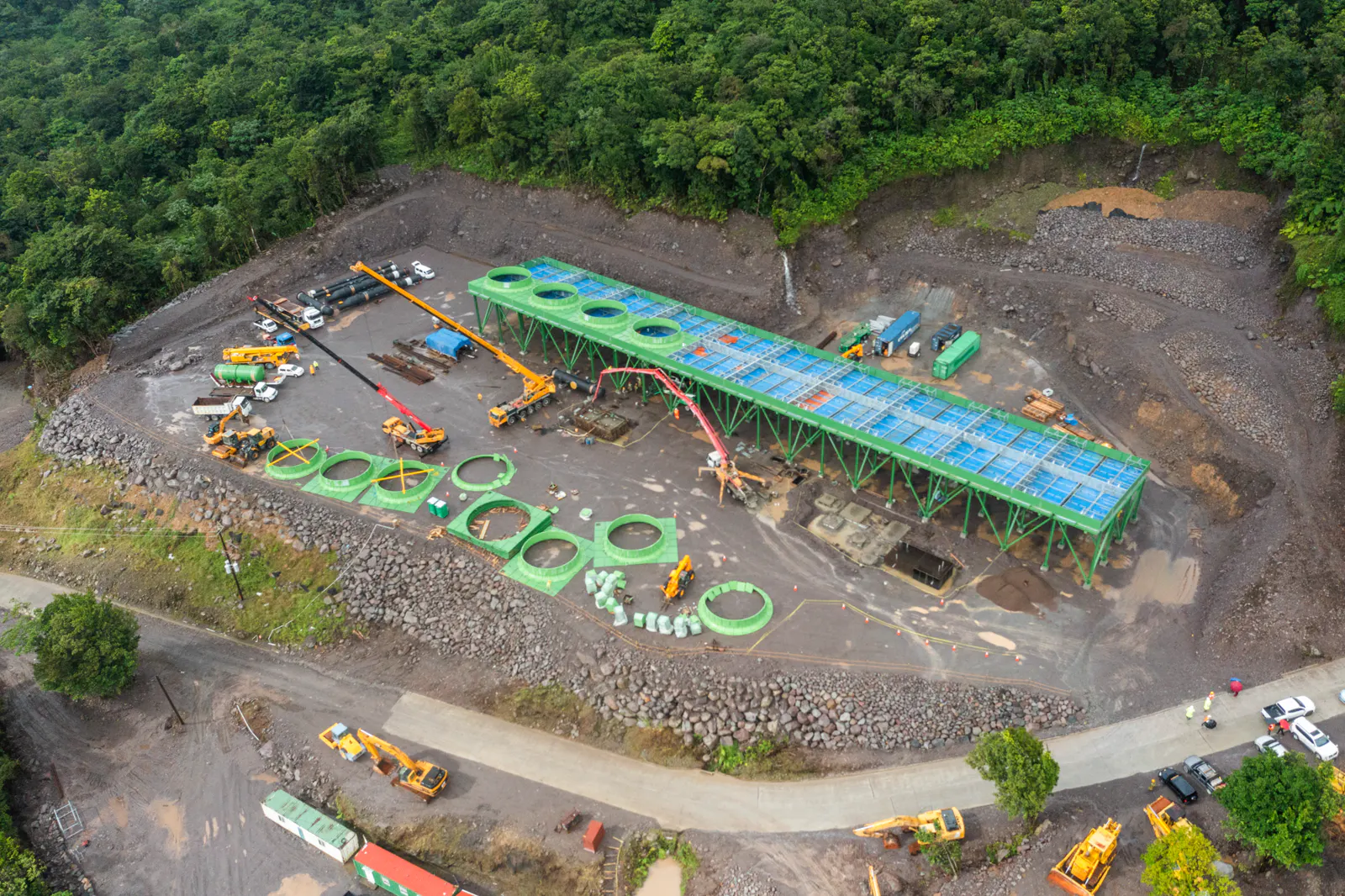
The recent visit of Dominica’s Prime Minister, Roosevelt Skerrit, to Guadeloupe as part of Franco-Dominican security cooperation serves as a reminder of something our territories have sometimes treated for too long as a mere matter of neighborhood relations: Dominica and Guadeloupe share far more than a maritime channel. They share vulnerabilities, flows, risks, and human, economic, environmental, and strategic interdependencies. This meeting aimed in particular to strengthen judicial, civil, and security cooperation between the two islands. But it is now time to broaden the very notion of security itself. Alongside policing, judicial, and civil security, another form of security is becoming central to the future of the Eastern Caribbean: energy and environmental security.
Read more: Dominica–Guadeloupe: Building a Shared Energy Security FrameworkIn island territories exposed to the volatility of global markets, dependence on imported hydrocarbons, hurricanes, seismic and volcanic risks, energy is no longer merely a technical issue. It has become a matter of sovereignty, resilience, economic competitiveness, and regional stability. This is precisely where Dominica and Guadeloupe hold a major strategic card to play together.
This cooperation is not a new idea. It already has a history. Work carried out through Interreg programmes, particularly around “Caribbean Geothermal Energy,” had already laid the foundations for an ambitious reflection on Dominica’s geothermal potential, Guadeloupe’s experience in Bouillante, and the possibility of a submarine electrical interconnection with the French Caribbean territories. The French Development Agency (AFD) also recalls that, from the earliest studies, the potential of the Roseau Valley and the feasibility of a submarine connection with Guadeloupe and Martinique had already been explored.
The real question, therefore, is not whether cooperation should begin. The real question is how to transform a precedent of cooperation into a sustainable strategic architecture.
Geothermal Energy as the Second Pillar of Dominica–Guadeloupe Cooperation
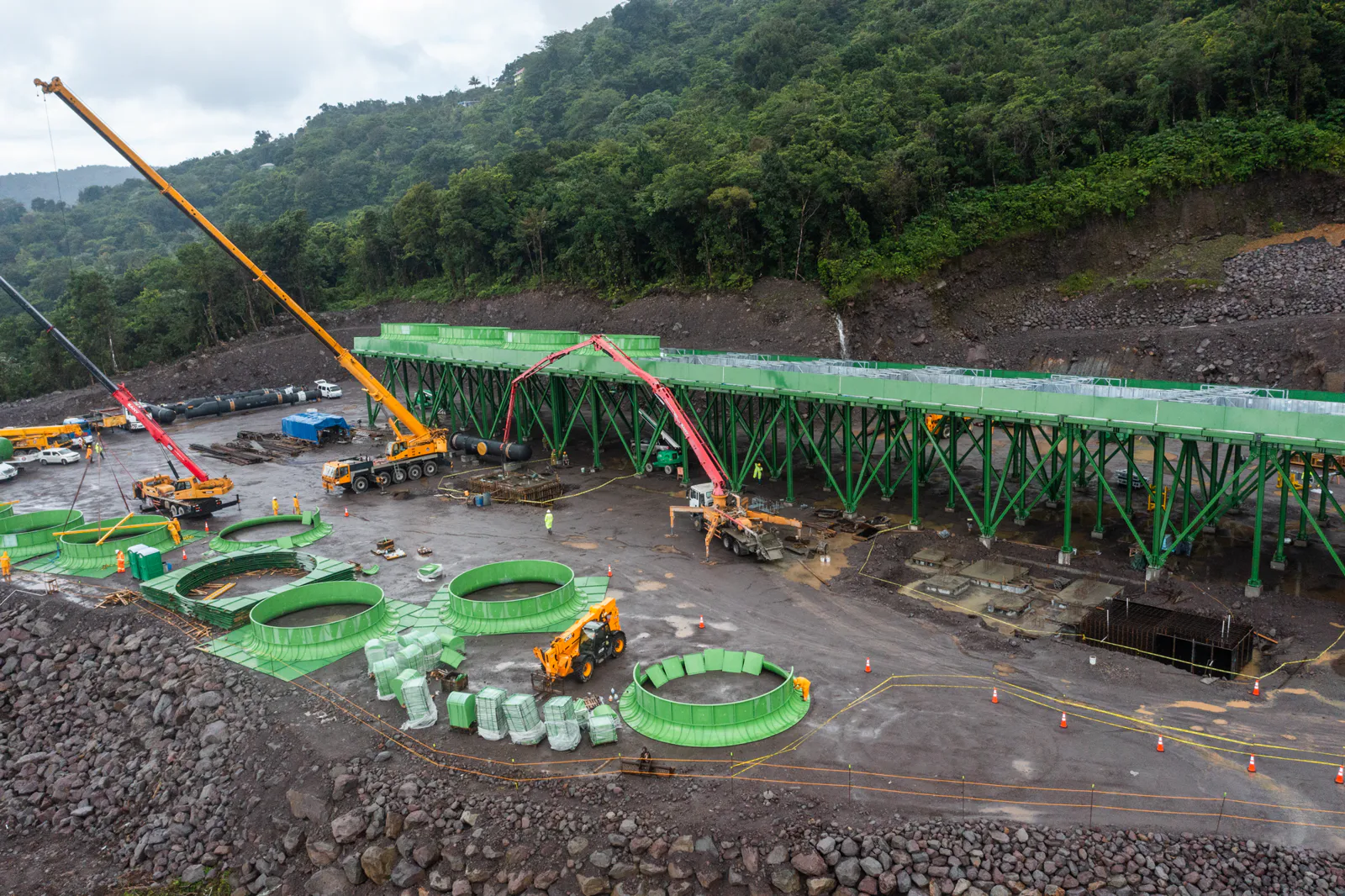
Guadeloupe possesses, through Bouillante, a rare experience in the Caribbean: that of a territory that has already integrated geothermal energy into its energy mix. Dominica, meanwhile, is reaching a decisive moment. Its 10 MW geothermal power plant project in Laudat, in the Roseau Valley, has entered an advanced commissioning phase after more than fifteen years of exploration, drilling campaigns, institutional structuring, financing efforts, and resilience in the face of climate shocks.
This long timeline is itself a strategic lesson: geothermal energy is not a communications project. It is not an announcement-driven energy source. It is an energy of patience, depth, technical rigor, governance, and institutional trust. It requires costly drilling, rare expertise, financial guarantees, solid legal frameworks, informed communities, adapted electrical networks, and political continuity over multiple mandates.
This is why the Dominican experience is valuable for the entire region. It demonstrates both the promises and the challenges of a serious energy transition in a small island state.
Dominica’s Minister for Foreign Affairs, International Business, Trade and Energy Vince Henderson stated this very clearly during an IRENA roundtable: small island developing states should not embark on geothermal development alone; they need strong partners, technical support, concessional financing, regulatory frameworks, and solid local and international teams. This lucidity is fundamental. It helps move beyond a naïve vision of energy development. Geothermal energy can transform our economies, but it cannot simply be decreed. It must be built, negotiated, and governed.
Building on Local Expertise Without Disconnecting From International Partners
One of the major challenges for Dominica, Guadeloupe, and the wider Eastern Caribbean is to avoid confusing international partnership with strategic dispossession. International partners are indispensable. AFD, the European Union, the World Bank, the Caribbean Development Bank, the IDB, the Green Climate Fund, Ormat, Icelandic expertise such as ÍSOR, and the technical skills mobilized around drilling and operations have all played a decisive role in Dominica’s geothermal trajectory. AFD indicates that it has supported the geothermal sector in Dominica since 2007 through financing and technical assistance, while the more recent structuring of the 10 MW project mobilized a significant regional and international financial architecture.
But energy projects can only succeed sustainably if territories retain local steering capacity. The Caribbean must not merely become a place where energy solutions are tested. It must become a place where competencies, governance frameworks, strategic arbitration, and cooperation doctrines adapted to island realities are produced.
This requires mobilizing engineers, lawyers, elected officials, public administrators, economic operators, academics, environmental experts, and risk specialists from within our own territories. It also requires creating structured spaces for dialogue between local expertise and international expertise.
The right strategy is neither localist withdrawal nor external dependence. The right strategy is one of partnership sovereignty: attracting the best technical and financial partners while strengthening local capacities to decide, negotiate, supervise, and arbitrate.
Turning the Dominica-Guadeloupe Corridor Into a Regional Energy Laboratory
The sea between Dominica and Guadeloupe should not be seen as a separation. It can become a relational infrastructure. This is the essence of an archipelagic approach to cooperation. Our islands are not merely isolated territories. They are nodes within the same system of relations, mobility, risks, and opportunities. From this perspective, the idea of a Dominica–Guadeloupe energy corridor deserves to return to the center of strategic debate.
This corridor could rest on several pillars.
1)First, a serious revival of discussions around a submarine electrical interconnection between Dominica, Guadeloupe, and potentially Martinique. This idea has already been examined in earlier studies supported by AFD and European programmes. It should not be treated as an outdated file, but as a strategic hypothesis to be reassessed in light of the recent progress of Dominica’s geothermal plant, Guadeloupe’s energy needs, and the new imperatives of energy transition.
2)Second, the creation of a Dominica–Guadeloupe Council on Energy, Resilience, and Critical Infrastructure. Such a council could regularly bring together political decision-makers, energy operators, regulators, risk experts, local authorities, academics, and technical partners.
3)Finally, the establishment of a cross-training programme between Dominica and Guadeloupe for elected officials, public administrators, technicians, engineers, lawyers, and economic actors involved in major energy projects.
This is not merely about producing electricity. It is about producing regional expertise.
Harmonizing Regulatory Frameworks: The Invisible Strategic Challenge
The success of deeper energy cooperation between Dominica and Guadeloupe will not depend solely on infrastructure or financing. It will also rely on a far less visible — yet absolutely decisive — challenge: regulatory and legal harmonization.
Dominica operates within a common law system and the institutional frameworks of the OECS. Guadeloupe operates under French and European law. This difference may appear to be a constraint. It could also become a Caribbean laboratory for articulating multiple legal systems.
A cross-border energy cooperation framework would involve complex issues: energy regulation, environmental law, public procurement, taxation, maritime law, insurance, liability in the event of incidents, cybersecurity, data protection, critical infrastructure security, financing conditions, public guarantees, power purchase agreements, and dispute resolution mechanisms.
In the case of a submarine electrical interconnection, these issues would become even more sensitive. Which legal framework would apply to the infrastructure? What arbitration mechanisms should be established? How should investments be secured? How can European law, French law, Dominican law, OECS standards, and international norms be articulated together? How can administrative or contractual blockages be prevented?
This is where Dominica–Guadeloupe cooperation could take on a genuinely innovative dimension. A new generation of professionals capable of operating at the intersection of law, energy, regional cooperation, and project finance would need to emerge — lawyers, but also elected officials and senior administrators capable of understanding arbitration, contractual negotiation, and regulatory governance dynamics. The Caribbean has too often imported legal and technical models designed elsewhere. The challenge is not to reject these models, but to adapt, negotiate, and master them. Regulatory harmonization is not an administrative detail. It is a condition of sovereignty.
Energy Security, Environmental Security, Economic Security
Geothermal energy must also be approached within a broader security framework. A power plant, submarine cable, transmission network, or drilling site constitutes critical infrastructure. These infrastructures must be protected against natural disasters, cyberattacks, industrial accidents, malicious acts, and supply disruptions. In a region exposed to hurricanes, earthquakes, and volcanic risks, energy security and environmental security are inseparable.
This is why Dominica–Guadeloupe cooperation could include common crisis management protocols, joint exercises, cybersecurity training for energy systems, exchanges between civil protection services, shared risk mapping, alert systems, and business continuity scenarios.
Such initiatives would naturally extend the security cooperation already underway between the two territories toward a more comprehensive vision of resilience. Twenty-first century security is no longer limited to borders, ports, courts, or law enforcement. It also includes water, energy, data, networks, roads, cables, soils, communities, and ecosystems.
Making Geothermal Energy a Lever for Caribbean Doing Business
Geothermal energy should not be viewed solely as a public policy issue. It can also become a lever for economic development. If well governed, it can help reduce production costs, attract new investment, support agro-processing, strengthen the tourism industry, foster the emergence of specialized technical services, and create qualified jobs. The Caribbean Development Bank has presented Dominica’s geothermal project as a major regional operation involving concessional financing and a private-sector partnership around Ormat Technologies. The project is expected to reduce Dominica’s dependence on diesel and strengthen its energy autonomy.
But for doing business to flourish, cheaper energy alone is not enough.
There must also be:
This is why the geothermal issue is also a business climate issue.
Dominica and Guadeloupe could attract companies specialized in engineering, maintenance, training, risk management, energy law, climate finance, clean technologies, and cybersecurity around this energy corridor. Energy cooperation can therefore become an instrument of economic transformation, not merely an infrastructure project.
From the Interreg Precedent to a New Doctrine of Cooperation
The Interreg programmes deserve credit for opening the way. They financed studies, identified potential, structured initial partnerships, and fostered dialogue among Guadeloupe, Martinique, Dominica, AFD, ADEME, BRGM, Caisse des Dépôts, European institutions, and other technical actors. But we are now entering a different moment.

Dominica’s geothermal plant is no longer a distant hypothesis. It is becoming operational reality. Regional security concerns are returning to the center of political dialogue. Energy costs continue to weigh heavily on our economies. Natural disasters regularly remind us of the vulnerability of our infrastructures. Small island states are searching for credible resilience models.
This is why the time has come to move from project-based cooperation to doctrine-based cooperation.
A Dominica–Guadeloupe doctrine of energy and environmental security could rest on five principles:
Thinking Bigger Than Our Borders
Dominica and Guadeloupe already share a history of cooperation. They share human, cultural, geographic, and strategic proximity. They also share common interests in a world where small island economies can no longer afford to think about sovereignty challenges in isolation. Prime Minister Roosevelt Skerrit’s visit to Guadeloupe on security matters opens a political window. That window should be used to broaden the scope of the discussion.
Yes, we must discuss judicial, civil, and cross-border security. But we must also discuss:
Geothermal energy can become one of the major strategic projects of this new phase — not merely as a natural resource to exploit, but as the foundation for a more mature, more technical, more ambitious, and more sovereign regional cooperation.
The Eastern Caribbean does not merely need projects. It needs architectures. And perhaps one of the first laboratories for this new architecture lies precisely there: between Dominica and Guadeloupe, within that maritime space we should stop seeing as a separation and finally begin to think of as a route, a connection, and an infrastructure for the future.
Geothermal power plant under construction at Laudat in Dominica’s central Roseau Valley (Photo: Office of the Prime Minister, Commonwealth of Dominica)