 11
11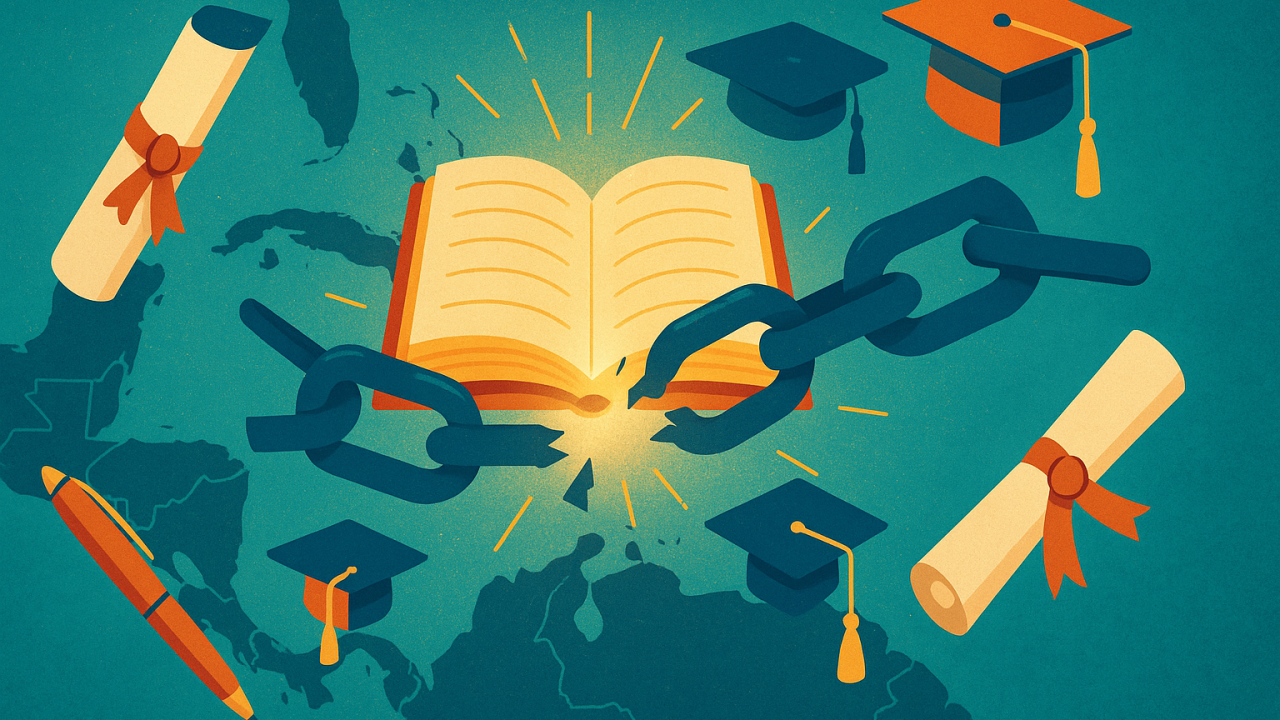
“Emancipate yourselves from mental slavery. None but ourselves can free our minds.” — Bob Marley, Redemption Song
Today is May 27th. In Guadeloupe, this date marks the final abolition of slavery. A day of commemoration, yes — but above all, a mirror. Because although the physical chains were broken, mental servitude and structural disparities persist in systems we have yet to fully unlearn — starting with education. My recent work on inclusive public policy for a French Caribbean territory, the strong words spoken yesterday by Roosevelt Skerrit, Prime Minister of Dominica, during a press conference, and the powerful statement by Mia Mottley, Prime Minister of Barbados, during the recent CARICOM Heads of Government Meeting, inspired me to share this reflection on such a symbolic date for Guadeloupe.
Education: the last fortress of the colonial mindset
Caribbean territories have inherited a patchwork of educational systems — French, British, Dutch, Spanish, American… But regardless of the language, they all stem from a shared colonial mold. A mold not designed to nurture, but to train, extract, dominate, and replicate a narrow elite, as French sociologist Pierre Bourdieu would say. Today, despite political independences, institutional reforms, or departmental integration/autonomy in the French Caribbean, the spirit of colonial schooling remains:
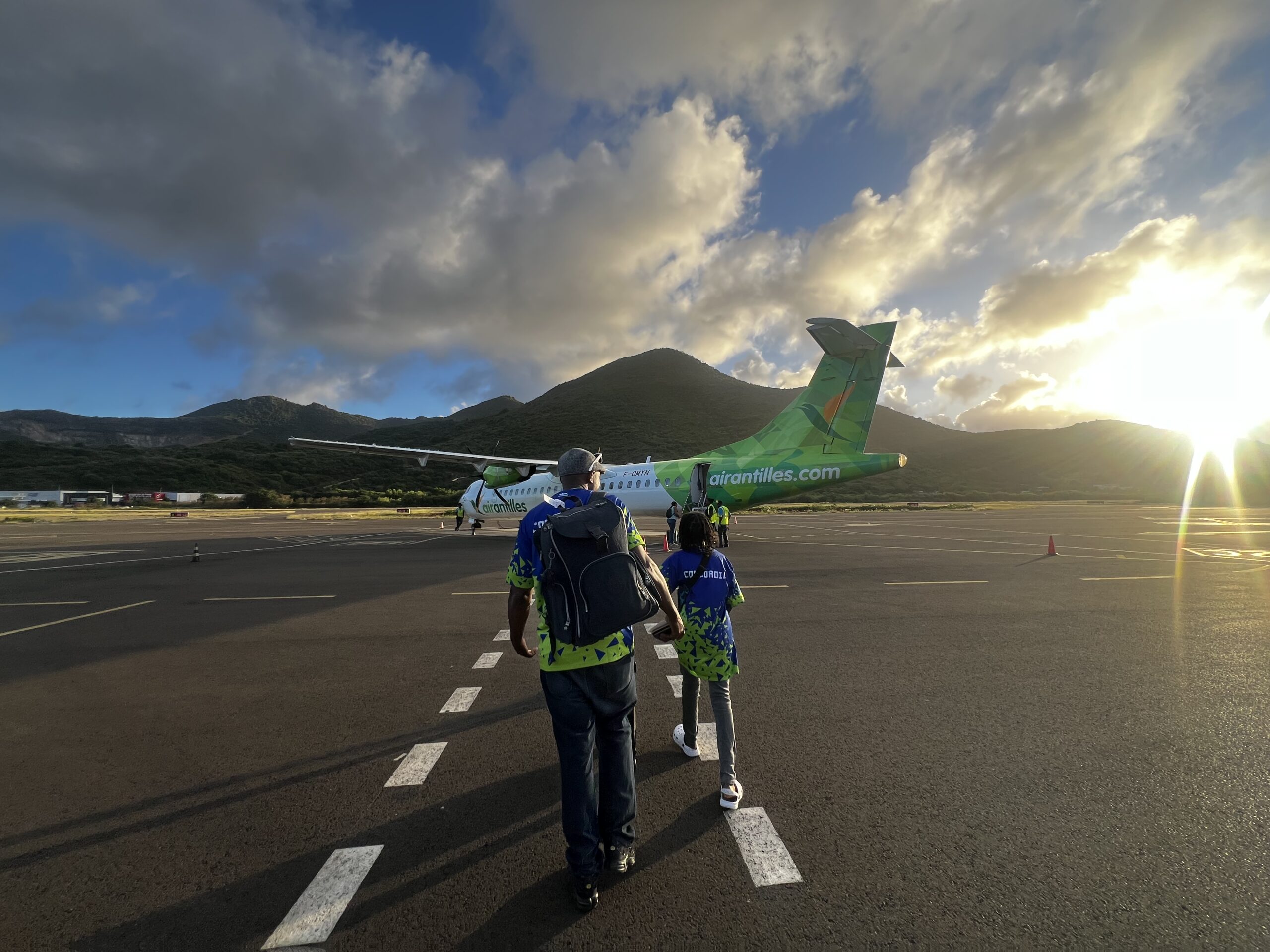
Our children — especially those who are neurodivergent, socially marginalized, or culturally distant from dominant norms — do not find their place in this system. I speak from personal experience: this year, I began homeschooling my eldest son. An Asperger’s autistic child, brilliant in science and deeply analytical, he no longer felt seen, recognized, or understood in school — let alone valued for his richness as a neurodivergent Caribbean child.
Roosevelt Skerrit: a blunt diagnosis
On May 26, 2025, during his weekly press conference, Prime Minister Roosevelt Skerrit declared:
“We are not building a culture of collaboration, we are not building a culture of cooperation, we are not building students with analytical skills and critical thinking, and comprehension skills.”
He names what many are living through: an education system that trains for conformity, not consciousness. This is even more alarming as AI reshapes every aspect of our lives. In a hyper-competitive world, the skills Skerrit highlights — analysis, critical thinking, comprehension — will be the cornerstones of survival and success. And that future world is already here. We must act fast, wisely, and collectively — starting from our margins, as laboratories of the Tout-Monde.
bell hooks and the pedagogy of liberation
Faced with this reality, bell hooks offers another path in Teaching to Transgress:
“To educate as the practice of freedom is a way of teaching that anyone can learn.”
She calls on us to transform the classroom into a space of joyful subversion and empowerment, where knowledge from the margins becomes a source of legitimacy. In a Caribbean marked by slavery, maroon resistance, syncretism, and rhizomatic identities — the very fabric of the world’s creolization — this vision is especially fertile. The Caribbean, a fractal, composite region woven with multiple memories, is the living laboratory of the Tout-Monde described so powerfully by the late Édouard Glissant. Here, teaching becomes an act of collective liberation.
A historic turning point: CARICOM’s Commission on Education Transformation
In February 2025, CARICOM announced the creation of a Commission for the Transformation of Education in the Caribbean. Its mission: to overhaul the educational systems of its member states so they finally align with the realities, strengths, and needs of Caribbean societies. This is not a technical adjustment — it is a political, cultural, and civilizational shift. It echoes what the 2024 Nobel Laureates in Economics (Acemoglu, Johnson, and Robinson) demonstrated: like institutions, education determines prosperity just as much as politics or economics.
Indeed, during the 48th CARICOM Heads of Government Meeting in February, Prime Minister Mia Mottley stated in her closing press conference:
“[Educational goals] They were designed for a colonial period with a hierarchical structure that only saw a few of our people.”
So what if we finally built a truly Caribbean school?
A school that is:
Teaching is an act of transgression. On this May 27th, let us remember: our ancestors transgressed to survive and resist. Now it is our turn — to transgress in order to transmit differently. To teach from the margins. To build an education that liberates, that heals, that uplifts. Only then will we live up to the Caribbean legacy — and its promise.
In my view, this project of a decolonial, humanist, and progressive education can only succeed on a regional Caribbean scale, driven by cooperation and collective intelligence. Unity has always been the fuel of revolutions.
*This article is the English translation of the original French version available here: Pour une révolution éducative caribéenne : faire des marges un nouveau centre de l’intelligence | LinkedIn